

Beyond Storage: How the Right Racking Strategy Improves Warehouse Performance
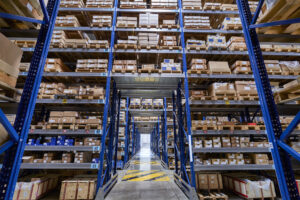
It’s easy to think of racking as a background detail — steel frames and beams that simply hold your inventory off the ground. But in reality, your racking system is one of the most influential decisions you’ll make about how your warehouse operates. It shapes how fast workers can pick orders, how safely forklifts move through your aisles, and how much of your facility’s square footage you actually put to work.
At BlueSkye Automation, we work with manufacturers, distributors, and logistics providers who are rethinking their storage strategy — not just to fit more product, but to run a smarter, more efficient operation. Here’s why racking deserves a strategic second look.
Racking Is a Performance Decision, Not Just a Storage Decision
The right racking configuration directly affects three things that drive warehouse performance every day:
- Space utilization — how much of your cubic footage, not just floor space, you’re actually putting to work
- Throughput — how quickly product moves from receiving to storage to picking to shipping
- Labor efficiency — how much time and effort your team spends traveling, reaching, and searching for product
When racking is chosen without a clear strategy, businesses often end up with systems that technically hold inventory but quietly work against operational efficiency; creating congestion, slowing pick times, or wasting valuable vertical space.
Matching Racking Type to How You Actually Operate
There’s no single “best” racking system — the right choice depends on your inventory profile, order volume, and how your team moves through the facility. Common options include:
- Selective racking for operations that need direct access to every pallet without shifting other product
- Drive-in and drive-thru racking to maximize density while still allowing forklifts into the system
- Push back racking for high-density storage that maintains better access to individual SKUs
- Pallet flow racking for fast, efficient inventory turnover with product moving directly to the pick face
- Carton flow racking for first-in, first-out picking of boxed or cartoned goods
- Wide-span shelving for hand-stacking and storing heavier, varied loads
- Cantilever racks for long or irregularly shaped materials like piping or textiles
- Mezzanines to unlock underutilized vertical space without expanding your footprint
Choosing among these isn’t just a matter of preference — it’s about aligning your storage system with your actual picking methods, SKU velocity, and product characteristics.
The Ripple Effect on Warehouse Performance
When racking strategy is done right, the benefits extend well beyond storage capacity:
- Improved throughput: Product flows more predictably from receiving to shipping, reducing bottlenecks at peak times
- Stronger safety outcomes: Properly engineered racking, clear aisles, and appropriate load ratings reduce the risk of accidents and product damage
- Lower labor costs: Less time spent searching for product or navigating congested aisles means more time spent fulfilling orders
- Greater flexibility: A well-planned racking layout can adapt as SKU counts grow, seasonality shifts, or automation is introduced down the road
Build a Racking Strategy That Works as Hard as You Do
Racking isn’t a one-time purchase decision — it’s a long-term operational asset. The right strategy today should also set your facility up for the automation and growth of tomorrow.
At BlueSkye Automation, we help businesses design racking and shelving systems tailored to their inventory, workflows, and long-term goals — and we integrate that strategy with the broader automation and material handling technology that keeps your warehouse running efficiently.
Ready to see what the right racking strategy could do for your operation? Contact BlueSkye Automation to get started!